San Juan Island · Friday Harbor
Moss Treatment & Roof Cleaning on San Juan Island
Kill the moss, protect the roof — the PNW way, without a pressure washer. Serving Friday Harbor, Roche Harbor, Cattle Point, Lime Kiln.
San Juan Roofing Co. provides moss treatment & roof cleaning for homes across San Juan Island, from Friday Harbor, Roche Harbor, Cattle Point to Lime Kiln. From Friday Harbor to the exposed west side, San Juan Island roofs take the county’s hardest wind and salt spray. We spec and install accordingly.
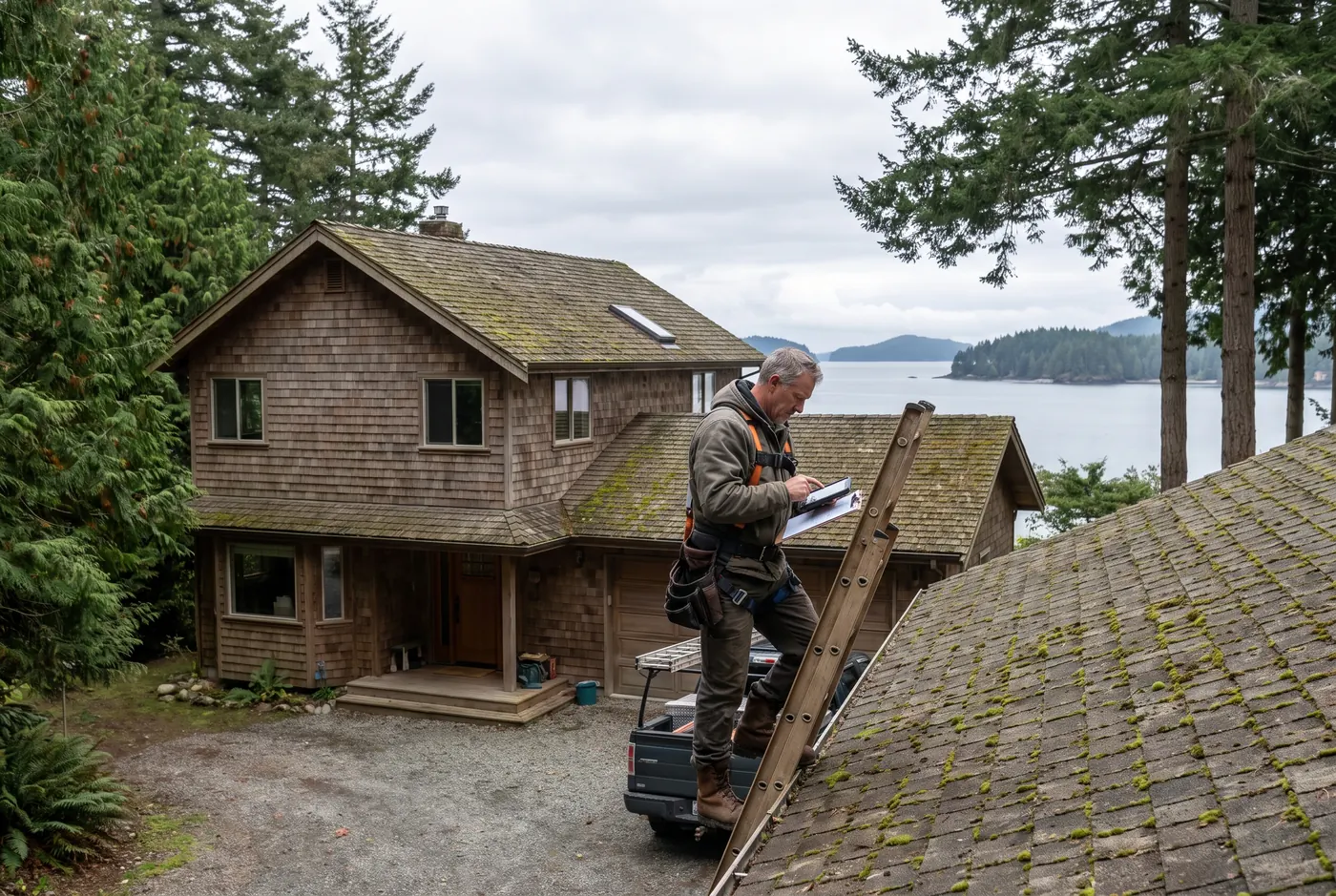
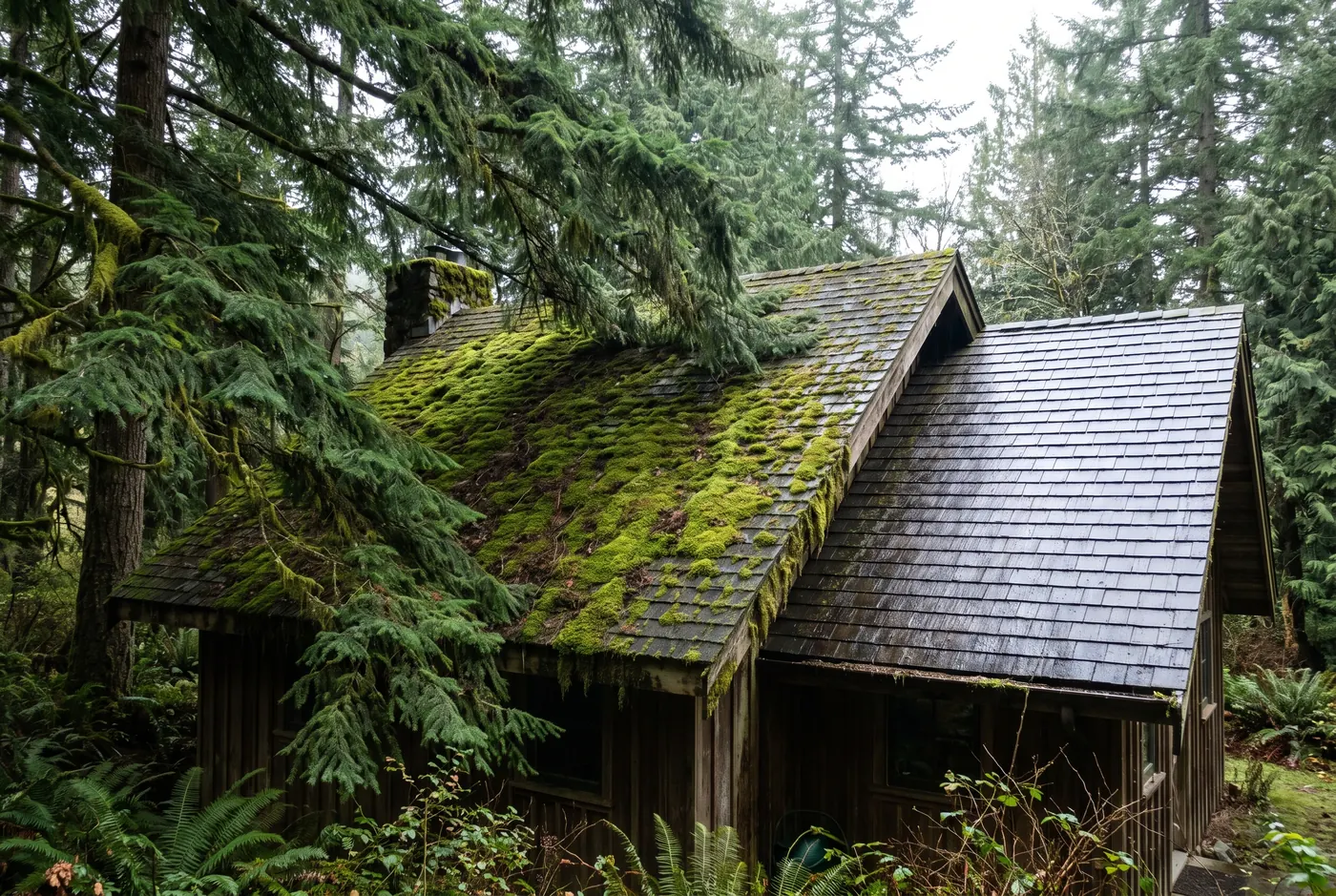
Moss is the number-one roof killer on shaded island roofs. It traps water against the shingles, lifts them, and rots the deck below. Our damp, tree-shaded north slopes on Orcas and San Juan grow it fast.
Why moss treatment & roof cleaning matters on San Juan Island
The west side (Lime Kiln / Cattle Point) sees wind roughly 20% stronger than Anacortes — fastening and edge-metal detailing matter here. Under Orcas’ firs, moss is a when-not-if problem. A yearly treatment costs a fraction of the deck rot it prevents.
What our San Juan Island moss treatment & roof cleaning includes
- Low-pressure, granule-safe cleaning (no pressure-washing shingles)
- Targeted moss & algae treatment
- Zinc / copper ridge strips to prevent regrowth
- Gutter clearing & debris removal
- Annual maintenance plans for shaded roofs
San Juan Island price range
$400–$1,600
Gentle treatment + cleaning for an average roof. Heavy moss, steep pitch, and multi-story access raise the range.
Estimate for a typical San Juan Island home — not a quote. Free on-island inspection gives your real number.
Real San Juan Island roofing questions
“I'm about 200 feet from the water at Cattle Point and I want a standing-seam metal roof. What gauge and coating actually holds up to the salt air out here?”
This close to saltwater we spec 24-gauge steel with a Kynar 500 / PVDF coating rated for coastal exposure, plus corrosion-resistant clips and stainless fasteners. Standard 26-gauge builder panels and cheap fasteners corrode within a few years in the salt zone. We'll walk your specific exposure and pick a system engineered for it.
“The last windstorm tore a bunch of shakes off the west-facing slope of my cedar roof. Can you just replace those, or do I need a whole new roof?”
If the deck and the majority of the field shakes are still sound, a targeted repair is usually the right call and far cheaper. We'll pull a few shakes to check the underlayment and fasteners first. If the cedar is broadly at end-of-life we'll show you the photos and be straight with you rather than patch a roof that'll fail again next winter.
“I've got a water stain on my bedroom ceiling but the roof above it looks fine. Where's the leak actually coming from?”
Water almost never enters directly above the stain — it travels along the deck or a rafter before it drips. Common culprits are flashing, a cracked plumbing boot, or a valley uphill of the stain. We track the actual entry point, fix that, and document it with photos so you're not paying to chase the wrong spot.
“My skylights leak every winter no matter how much sealant I glob on. Can you actually fix that for good?”
Sealant is a band-aid — skylights leak because the flashing kit is wrong, old, or was never step-flashed into the roof properly. The real fix is to re-flash the skylight into the roofing system with the correct kit and, if the units themselves are shot, replace them. Done right, it stops leaking without a tube of caulk every fall.
Learn more about our moss treatment & roof cleaning service, or see all roofing on San Juan Island.