Published July 12, 2026 · by San Juan Roofing Co.
Key takeaways
- Island standing seam metal roofs usually cost $14,000–$45,000+. That's an estimate, not a quote. A free on-island inspection gives your real number.
- Hidden clips and no exposed fasteners make standing seam the best long-term roof for 40 inches of rain a year and strong west-side wind.
- Near saltwater, ask for 24-gauge metal with a marine-grade Kynar 500 / PVDF coating, plus corrosion-resistant fasteners and clips.
- Corrugated and exposed-fastener panels cost less and fit barns and outbuildings. But they need more upkeep than a seamed roof.
- Ferry logistics, roof complexity, and coastal-grade materials are the biggest reasons island metal costs more than a mainland roof.
Metal is the roof that makes the most sense out here. We get salt air, wind that hits the west side of every island about 20% harder than Anacortes, and around 40 inches of rain a year. A well-installed standing seam roof can outlast the home’s next two mortgages. This guide breaks down what standing seam really costs in the San Juan Islands. You’ll see what pushes the price up or down, and how it stacks up against corrugated metal, so you can budget with your eyes open.
In the San Juan Islands, a standing seam metal roof usually costs $14,000 to $45,000+, or about $12 to $20 per square foot installed. Your price depends on gauge, Kynar 500 coating, panel profile, roof complexity, and ferry logistics. Ferry costs cover hauling crew, material, and old-roof disposal across the water. Treat any number online as an estimate, not a quote.
What does a standing seam metal roof cost in the San Juan Islands?
A small, simple-roof home in Friday Harbor or Lopez Village often lands in the $14,000–$22,000 range. A larger house with several slopes, dormers, and waterfront-grade coastal materials on Roche Harbor or a west-facing Orcas headland can climb to $35,000–$45,000+. Most island jobs sit somewhere in the middle.
That’s higher than a mainland quote for the same square footage. The reason is geography, not markup. Every panel, fastener, and crew member reaches your island by ferry. Your old roof leaves the same way for off-island disposal. When you compare bids, make sure the gauge, coating, and warranty match. A cheaper number usually means thinner metal or a lesser finish. Our standing-seam metal roofing estimates spell out exactly what you’re paying for.
Standing seam vs. exposed-fastener vs. corrugated: cost at a glance
Not all “metal roofs” are the same product. Here’s how the three common island choices compare:
| Metal roof type | Installed cost (island) | Lifespan | Look | Best use |
|---|---|---|---|---|
| Standing seam | $14,000–$45,000+ | 50+ years | Clean vertical seams, no visible screws | Primary homes, coastal & waterfront, “forever” roofs |
| Exposed-fastener (ag / R-panel) | $10,000–$24,000 | 25–40 years | Visible fastener lines, plain look | Budget replacements, garages, mixed-use buildings |
| Corrugated | $9,000–$20,000 | 20–35 years | Wavy, rustic / industrial | Barns, outbuildings, sheds, accent roofs |
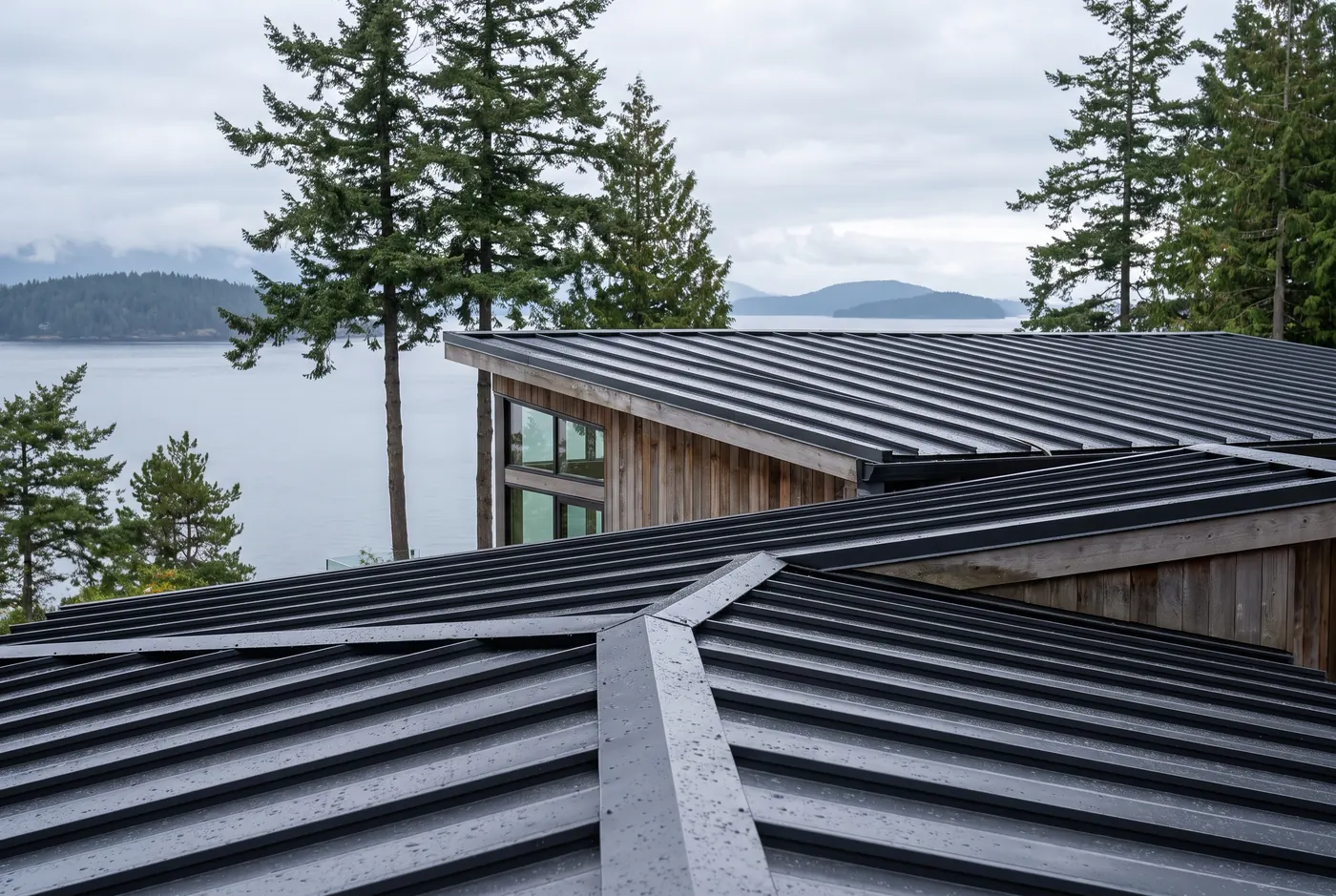
Standing seam costs the most because the metal is heavier, the panels lock together with hidden clips, and it takes more labor to install. You’re paying for a roof with no holes punched through the water-shedding surface. In a place that gets 40 inches of rain a year, that’s exactly where the value is.
What drives the cost of a metal roof?
Six things move your standing seam price more than anything else:
- Gauge (metal thickness). Thinner 26-gauge steel is cheaper, but it dents and oil-cans more. 24-gauge is the island standard for durability and wind resistance. Waterfront homes shouldn’t go thinner than 24-gauge.
- Coating and finish. A marine-grade Kynar 500 / PVDF finish resists fading, chalking, and salt corrosion far better than budget SMP paint. Near saltwater, it’s a must. It keeps the panels from breaking down in the salty air off the shoreline.
- Panel profile. Snap-lock profiles install faster and cost less. Mechanically-seamed panels cost more, but they give the best weather and wind performance on exposed west-side slopes.
- Roof complexity. Hips, valleys, dormers, skylights, and steep pitches all add cut waste, flashing, and labor. A simple gable roof is far cheaper per square foot than a cut-up roof with many planes.
- Coastal-grade parts. Corrosion-resistant stainless or coated fasteners, clips, and flashing add cost, but they’re a must within sight of saltwater. Skip them and you turn a 50-year roof into a 15-year one.
- Ferry logistics. Staging crew and material, barge or ferry freight for long panels, and off-island tear-off disposal are real line items here. A Bellingham contractor just doesn’t carry them.
These stack up differently on every home, so an online range only gets you in the ballpark. If you’re weighing a full tear-off, our roof replacement inspection prices each of these for your specific roof.
Standing seam vs. corrugated: which should you choose?
The main difference is where the fasteners sit. Corrugated and exposed-fastener panels screw straight through the face of the metal, with a rubber washer under each screw head. Standing seam hides its clips under the raised seams, so nothing pokes through the water-shedding surface.
That difference matters more on the islands than almost anywhere:
- Leaks. Every exposed fastener is a possible leak. Over 25–30 years of wet winters, those neoprene washers dry out and the screws back out. Sun and hot-cold cycles speed it up. Standing seam has none of that across the main roof.
- Wind. Hidden-clip standing seam flexes with our stronger west-side gusts instead of leaning on screws to hold panels flat. Exposed-fastener roofs can “wallow out” their screw holes over time.
- Moss and debris. Both shed better than shingles. But a smooth standing seam under Douglas fir drops needles and moss more cleanly than a corrugated valley that traps debris.
- Upkeep. Corrugated roofs need their fasteners checked and re-tightened or replaced now and then. Standing seam is close to install-and-forget.
Corrugated still earns its place. For a barn on Shaw, a detached garage on Orcas, or an outbuilding where budget beats long life, exposed-fastener metal is a smart, honest choice. For the house you actually live in — especially near the water — standing seam is the roof we recommend.
Is a standing seam roof worth it? The ROI case
Standing seam has the highest up-front cost of any common roof. For most island homeowners, it also has the lowest lifetime cost. Here’s the math that isn’t on the invoice:
- A good asphalt shingle roof lasts about 20–25 years here, often less on shaded, moss-prone north slopes. Over 50 years, that’s two to three shingle roofs. Each one has its own tear-off, disposal, and ferry-driven labor.
- One standing seam roof, built right, spans that same 50 years with little upkeep.
- Metal also saves energy (reflective Kynar finishes cut summer attic heat), sits better with insurers, and helps at sale time. In a market where buyers order a real-estate roof inspection before closing, “new standing seam metal” is one of the strongest lines a listing can carry.
Add the things that matter out here — a roof that handles salt air, wind, and 40 inches of rain without a yearly worry list — and the extra cost usually pays for itself well inside its life.
Get a real number for your island roof
Every roof on these islands is different. The honest answer to “what will mine cost?” comes from standing on it. San Juan Roofing Co. is a licensed, bonded, and insured island contractor. Our on-island inspections and written estimates are free, with no ferry-trip surcharge to get a straight answer. We’ll tell you honestly whether standing seam, exposed-fastener, or a repair is the right call for your home and budget.
Ready for a real number instead of a range? Contact us or call (360) 205-1462 to book your free inspection on San Juan, Orcas, Lopez, Shaw, or the outer islands.
Frequently asked questions
How much does a standing seam metal roof cost in the San Juan Islands?
Is standing seam worth the extra cost?
What gauge and coating should I use for a home near saltwater?
Standing seam vs. corrugated metal — which is better for island roofs?
Why does a metal roof cost more on the islands than on the mainland?
Ready to move forward?
Talk to an island-based roofer — free inspection, honest advice.